

2026 India Dropshipping Market Prediction: Size, Opportunities, and Your Path to Profit
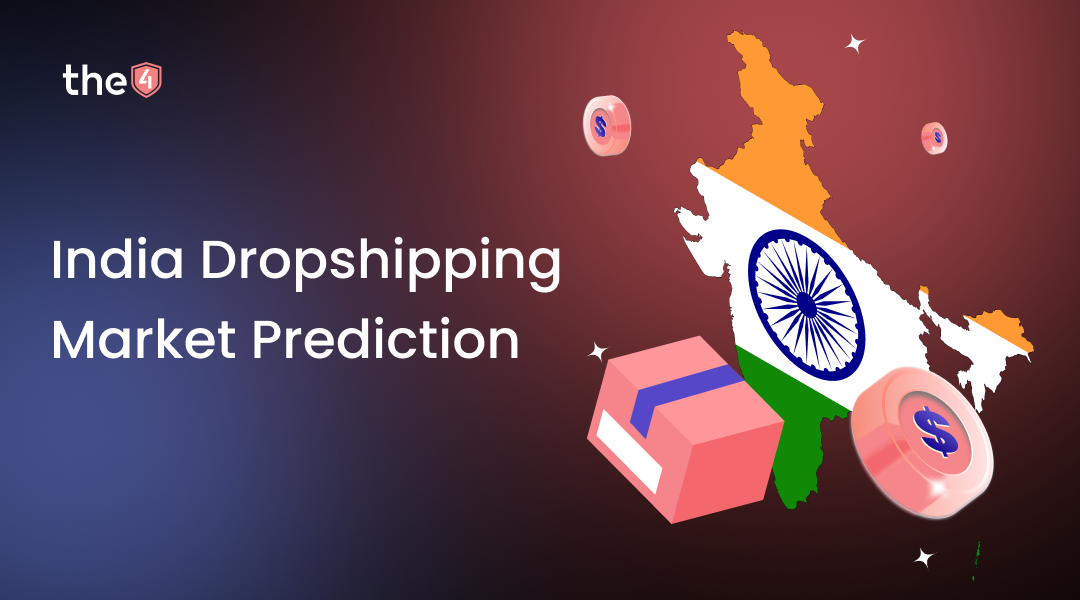
The Indian dropshipping market is projected for explosive growth, with a forecasted CAGR of over 22% and a market size expected to exceed $100 billion by 2030. Success in this competitive landscape requires moving beyond generic reselling and building a strategic, localized, and brand-focused e-commerce business.
Introduction
Hi there, I'm Rainy, The4's chief marketing officer. I have been an expert in Shopify, SEO, and helping entrepreneurs create successful online businesses from the ground up for more than ten years.
At the moment, every indicator points to India as a crucial market.
The market is expected to grow at an astounding ~21–22.6% CAGR, surpassing $325 billion by 2030. This is a fundamental change in international e-commerce, not merely a fad. But it takes more than just hype to navigate it. A new playbook is needed.
This guide is available to assist you. I'll give you specific, doable tactics to help you thrive in 2026.
Now let's get started.
India Dropshipping Market Size & Growth Projections (2024-2033)
Current Valuations and Future Forecasts
Here are two of the most cited forecasts:
-
IMARC Group valued the Indian dropshipping market at USD 10.8 billion in 2024. They project it will skyrocket to USD 67.5 billion by 2033. The Indian dropshipping market will grow at a Compound Annual Growth Rate (CAGR) of 22.60%. I think the Indian dropshipping market will keep growing.

-
Grand View Research puts the numbers even higher, reporting a market revenue of USD 20.78 billion in 2023. Their forecast predicts a climb to an astonishing USD 102.39 billion by 2030, fueled by a CAGR of 25.6%.

This is not slow or steady growth. The market is expected to multiply several times over the next decade. With growth rates above 20%, now is a great time to begin.
The exact numbers are less important than the fact that many trusted sources agree: the Indian dropshipping market is growing quickly. For entrepreneurs, this shared view matters more than the specific figures.
Key Drivers Fueling This Explosive Growth

Several economic, technological, and social factors are driving this substantial growth.
1- Rising Internet Penetration and Smartphone Usage: This forms the basis of the entire digital economy. With approximately 700 million internet users and still counting, the target market has endless potential.
2- Growth of E-commerce Platforms: The presence of giants such as Amazon India and Flipkart, and other platforms like Shopify, which give power to individual vendors, has ensured that the e-commerce industry is quite mature and evolved. Today, it’s easier than ever to start an e-commerce site that looks professionally made.
3- Low Initial Investment: You don’t have to buy inventory upfront, which removes a big risk that many traditional businesses face. This makes it easier for more people to become entrepreneurs.
4- Ease of Business Setup: Thanks to platforms like Shopify, you can set up a professional online store in just a few days. The technical challenges that used to slow people down are now mostly gone. Plus, lots of web-development experts, like The4, can consult and help you create the whole Dropshipping webpages as flash.

Explore The4’s service packages you may need further here:
5- Expanding Digital Payment Infrastructure: UPI makes digital payments easy, while cash on delivery helps build trust. Together, they create a payment system that works for everyone, which is key to increasing sales in India.
6- Access to Global and Local Suppliers: Modern-day dropshippers can tap into a global array of products. They can source their products from global market leaders like AliExpress or, more and more, work with a steadily expanding list of reputable suppliers in India like IndiaMART and Baapstore.
7- Rising Demand for Niche Products: Consumers in the Indian market are increasingly looking for products that cater to their special interests, such as environment-friendly household items, advanced sporting equipment, or ethnic clothing. The potential for dropshippers in such a marketplace is considerable, as they only need to locate such markets.
8- Government Support for Small Businesses: The efforts of the Indian government to encourage digital entrepreneurs and investments in e-commerce are a great aspect that encourages online businesses to flourish.
Who's Thriving? Understanding the Indian Dropshipper's Profile
To succeed in this market, it’s important to know who the Indian dropshippers are. What worries them? What do they hope to achieve? From my experience, they fit into a few main groups, each with its own reasons for starting.

1. The Aspiring Entrepreneur (The Dreamer)
It can be students, recent graduates, stay-at-home parents, and professionals seeking additional income. The drivers for this generation are achieving financial independence and enjoying the perks of a low-risk entrepreneurial model. They are lured by the idea of becoming entrepreneurs without financial risks.
-
Their Goal: To validate the business model. Their first major milestone is getting that first sale, then reaching a consistent ₹10,000-₹20,000 in monthly profit. They want to learn the ropes and prove to themselves that this is a viable path.
-
Their Biggest Fear: Dealing with untrustworthy vendors, wasting money on advertising, and managing legal obligations like GST registration.
2. The Existing E-commerce Business (The Scaler)
These merchants already have an online store or sell on marketplaces like Amazon. These merchants consider dropshipping as a tool for expansion since they can test new lines of products with no inventory risk and expand their offerings.
-
Their Goal: It consists of increasing the average order value and customer lifetime value. They may seek revenue diversification or optimization of the supply chain by conducting extra activities. They think in terms of market share and brand extension.
-
Their Biggest Fear: They will damage the brand reputation through bad quality suppliers or bad customer service. Major concerns revolve around logistics and the capability of maintaining quality at scale.
3. The Savvy Investor & Market Researcher (The Analyst)
It consists of due diligence or an investment fraternity doing due diligence and eyeing investment opportunities in the Indian digital economy. The group requires authentic data, trend analysis, and a full understanding of market dynamics.
-
Their Goal: To identify high-growth sectors, understand the competitive landscape, and make informed investment or strategic planning decisions.
-
Their Biggest Fear: Making strategic investment decisions on faulty or incomplete data. They like to validate sources and not rely on market hype.
What Information Indian Dropshippers Truly Seek: Beyond Just Statistics
India Dropshippers are hungry for actionable, practical, and localized advice.
-
They don’t just want to know the market is growing-they want honest expectations. They need to hear about both the big profit potential and the real challenges, including the time it takes to succeed.
-
They don't just want a "list of suppliers"; they want to know how to vet them. How do you find a supplier who won't disappear after you place a large order? Who can handle COD remittance efficiently and reliably?
-
Instead of "product ideas," they require a system that can help them find profitable niches that are not oversaturated with existing offers in that niche.
-
They don't just want to know "how to run ads"; they want to know how to run ads that resonate with the Indian consumer. What language should they use? What platforms work best? What cultural nuances should they be aware of?
-
They require a roadmap of steps regarding the legal and finance structure. The process of business registration, GST, PAN cards, and payment gateways can be extremely daunting to a beginner.
Knowing these real needs is the secret to creating content and businesses that actually help this audience. They want more than just numbers - they want someone to guide them.
Top Product Niches for Indian dropshipping
The market is big, and you’re ready to start. But what should you sell? Picking the right niche is one of the most important choices you’ll make. Below are some suggestions.
Top-Performing Product Categories
Let's start with the heavyweights. Based on market data, some categories are clear leaders.
|
Segment Type |
Product Category |
Key Information |
|
Largest Revenue Share |
Fashion |
Largest revenue-generating segment in 2023; held a 34.01% revenue share in 2024. Projected to continue dominating Indian e-commerce. |
|
Largest Revenue Share |
Electronics and Appliances |
Largest share in the overall Indian e-commerce Market in 2023. |
|
Fastest Growing/Most Lucrative |
Food & Personal Care |
Expected to have the fastest growth rate during the forecast period. This is a massive emerging opportunity. |
|
Key Growth Driver |
Niche-based Stores |
Focus on specialized products (eco-friendly goods, fitness accessories, ethnic fashion) to target specific customer segments and stand out. |
|
Trending Products (2026) |
Designer Silicone Phone Cases, Heavy-Duty Resistance Bands, BPA-Free Shaker Bottles, RGB LED Strip Lights, TWS Wireless Earbuds, Magnetic Car Phone Holders, Facial Hair Trimmers for Women, Mini USB Rechargeable Fans |
Specific, high-demand items that are perfect for the dropshipping model. |
The data reveals something interesting. Fashion is the top category now, but Food & Personal Care is growing the fastest. This shows the market is shifting, with more people spending on wellness and specialty foods. For new dropshippers, this matters. Fashion is popular but crowded, so personal care might offer a better chance to succeed.
This brings us to the most important strategy of all: niching down.
Read more: Founder's Guide for Dropshipping Companies in India
Identifying Your Niche
Trying to become the next Amazon or Flipkart is unlikely to work. In a competitive market, it’s better to focus on a smaller niche where you can stand out. Here’s how you can find your niche:
1- Become a Trend Hunter: Use tools to your advantage.
-
Google Trends: Your trusted resource.

Select Region: set it to India, and search for hot keywords, like: Is “air fryers” a hot topic? Is “Korean skincare” on the rise?

The best part? It's absolutely free and valuable information. I highly recommend you subscribe to Google Trends’ letter to receive the later of Global trends news.

-
Analyze E-commerce Bestsellers: I’ll show you how: Just browse through the top e-commerce sites like Amazon or Flipkart.

Their "Bestsellers" and "Movers and Shakeers" sections will provide you with plenty of ideas. Instead of copying others, try to spot some trends.
-
Social Media Scavenger Hunt: Instagram Reels, Facebook groups, and even Pinterest are goldmines for spotting trends. To find the desired videos or posts, you need to answer some questions: What are influencers' unboxing videos? What are people asking for in community groups?
2- Follow the Profit: Your passion is great, but profit pays the bills.
-
The 40% Rule: Focus on products with a good profit margin - ideally at least 40%. This helps cover marketing costs and still lets you earn a solid profit.
-
Think Lightweight: Shipping costs can eat into your margins. Focusing on products that are small and lightweight is a simple way to keep costs down and profits up.
-
Be a Problem Solver: The best products do more than look good- they fix a real problem. For example, a magnetic car phone holder helps drivers keep their phones in place, and a facial hair trimmer makes grooming easy. Products that solve problems are seen as more valuable.
3- Start Small, Scale Smart: Don’t open your store with hundreds of products. That can be overwhelming for both you and your customers.
-
Find Your "Winning" 3-5: Begin with a hyper-focused selection of 3-5 products that you have researched thoroughly and believe in. This will help you to concentrate your marketing budget and efforts.
-
Test, Learn, and Expand: After you see which products are selling, focus on those and slowly add more. Let your customers’ choices guide how you grow.
Common Challenges & Mitigation Strategies of India's dropshipping
The truth is, dropshipping is not always easy. Knowing the common challenges ahead is the first step to overcoming them.
Here are the biggest hurdles you’ll face on your journey:
-
Logistics and Shipping Issues: Consumers in the Indian market demand speedy delivery, even 1-2 days in some cases. Dropshipping, particularly from foreign vendors, tends to have delivery periods of 12-30 days, causing customer complaints, cancellations, & poor reviews.
-
High Return to Origin (RTO) Rates: RTO rates can be as high as 50-60%, primarily due to a lack of cash-on-delivery (COD) order confirmation and poor product quality. Since COD is a preferred payment method in India, managing the high costs associated with returns (reverse logistics costs can be 1.5x more than forward shipping) is a major hurdle.
-
Intense Competition and Low Profit Margins: The Indian eCommerce market is highly competitive, dominated by giants like Amazon and Flipkart, which often offer lower prices and massive discounts. Thus, the profit margin for the dropshippers is low.
-
Supplier Reliability and Quality Control: As a middleman agent, the drop shipper does not have control over the quality of the products. This aspect might result in a poor quality of products being supplied to the consumer. This has a direct impact on the reputation of the brand.
-
Payment Gateway and Financial Holds: High refund and RTO rates can cause payment gateways to flag a store as "risky" and hold funds for weeks or months, creating cashflow problems that can suffocate a new business.
-
Lack of Brand Identity: It can be hard to own a unique brand identity and cultivate customer loyalty when you select mass items. In a crowded market, products lacking a compelling story or unique value proposition are soon forgotten.
-
Regulatory Compliance: Adherence to taxation and licensing regulations, like GST registration (mandatory if annual turnover exceeds ₹ 20 lakhs), and managing import regulations and import duties can be tricky.
Localizing for Impact: Suppliers, Logistics, and Marketing for the Indian Consumer
It includes:
-
Finding Reliable Indian Dropshipping Suppliers
-
Optimizing Shipping for Tier II/III Cities and Beyond: Delhivery, Shiprocket, and India Post
-
Effective Marketing: Leveraging Social Media, UGC, and Hyper-Local Ads with Hinglish
Let’s go to the first tactic:
1- How to Find Reliable Indian Dropshipping Suppliers
Sourcing locally is a massive strategic advantage. It typically means faster shipping, easier communication, and products that are better aligned with local tastes.
My advice for you is: You should take your supplier vetting seriously. Make a scorecard to rate them on communication speed, product quality from samples, shipping times, and how well they meet dropshipping needs like blind shipping. Doing this work early will help you avoid many problems later.
You can reach out: 19+ Best Dropshipping Suppliers India for Your Business here.
2- How to Master Indian Logistics and Shipping
Your marketing should fit the local culture.
I would love to give you the Logistics Playbook, consisting of 4 trustworthy logistic partners:
|
Provider Name |
Best Use Case |
Expert Insight |
|
Best for Beginners & All-Rounders. |
This is a logistics aggregator, not a single courier. It integrates seamlessly with Shopify and lets you choose from multiple courier partners (like Delhivery, Blue Dart) for each shipment, automatically recommending the best option based on price and speed. It simplifies COD management significantly. |
|
|
Best for Bulk & COD. |
One of the biggest networks in India, covering over 18,000 PIN codes. They are a reliable workhorse for scaling businesses with significant order volume. |
|
|
Best for Premium/Fragile Goods. |
The premium choice for high-value items where reliability and speed are paramount. Use them for your expensive products to build customer confidence. |
|
|
Best for Deep Rural Reach. |
Don't underestimate the National Post. For reaching the most remote corners of the country where private couriers may not service, India Post is an essential and trustworthy option. |
How to Market Effectively to the Indian Consumer
Your marketing must be culturally fluent.
-
Master of Social Media: Your audience lives on Instagram Reels, Facebook Groups, and WhatsApp. Besides, using WhatsApp for customer communication and building communities is a uniquely powerful strategy in India.
-
The Power of Hinglish: A mix of both English and Hindi words in your ad copies or captions can make your brand sound very relatable and authentic, increasing ROAS and engagement levels.
-
User-Generated Content (UGC) is Valuable: Create video advertisements where customers actually use your product. The best way to build trust is to have customers do the talking for you via user-generated video advertisements.
-
Email for Retention: Social media is for acquisition; email is for building long-term value. Use a tool like Klaviyo to create automated email flows for abandoned carts and to nurture your customer relationships.
3- The Holy Trinity of Indian Payment Gateways: COD, UPI, Cards

Getting your payment options wrong is a catastrophic, yet easily avoidable, mistake. In India, you must offer a flexible checkout experience.
|
Payment Method |
Why It's Non-Negotiable |
|
Cash on Delivery (COD) |
This is the ultimate trust builder. Over 70% of Indian e-commerce transactions are still COD. Not offering it will kill your conversion rate, period. Logistics aggregators like Shiprocket make managing COD payments simple. |
|
UPI (Unified Payments Interface) |
This is the king of digital payments. It's mobile-first, instant, and the preferred method for millions. A checkout that doesn't prominently feature UPI will see a massive drop-off rate. |
|
Credit/Debit Cards |
Essential for trust and higher-value orders. Particularly important for urban audiences and for conveying a sense of professionalism and security. |
Solution: Integrate a top-tier Indian payment gateway like Razorpay or Cashfree.

They are reliable, easy to set up with Shopify, and offer all the essential payment methods (UPI, Cards, Net Banking, Wallets) in a single, seamless checkout experience.
The Future of Dropshipping in India
The market is hot now, but what does the future hold? But the long-term success will depend on your ability to adapt to two key trends.
1- Leveraging AI and Advanced Tools for Enhanced Customer Experience and Operations
Why is this the future? Because the Indian consumer has evolved. They have leapfrogged entire technological generations and are now accustomed to the hyper-personalized, instant-gratification world of "quick commerce" and sophisticated apps. Generic, one-size-fits-all e-commerce is no longer enough. Only AI can scale to this new, and much higher level.

The data backs this up. A report by McKinsey found that around 78% of consumers say they are more likely to make repeat purchases from companies that offer a personalized experience. In a market as competitive as India, this isn't a luxury; it's a core requirement for survival.
Here's how this trend is becoming a reality for dropshippers:
-
AI-Powered Chatbots: The challenge in India isn't just offering 24/7 support; it's offering it across a dozen languages. With over 22 official languages spoken, AI tools like LimeChat that can converse fluently in Hinglish, Tamil, Bengali, and more are not just a "nice-to-have"-they are a strategic necessity to build trust and convert customers across the entire country.

-
Intelligent Product Recommendations: The days of static "products you might like" sections on websites are long gone. Real user data is used in real time by solutions like Clerk.io, enabling a level of personalization previously only available to companies like Amazon. Average Order Value, a crucial metric when talking about profitability, is directly impacted by this.
-
WhatsApp Automation: With over 800 million users in India, WhatsApp is the primary communication channel.

Using AI to automate everything from cart recovery to shipping updates on this platform isn't just an advanced tactic; it's meeting your customer on their preferred turf with a level of efficiency your competitors can't match manually.
May you be interested: Top 10+ Shopify Whatsapp Apps For Your Store
2- Sustaining Profitability: The Shift from Generic Dropshipping to Brand Building
Here is the evidence and reasoning:
-
Rising Ad Costs: As more sellers flood the market, the cost of advertising on platforms like Facebook and Google in India is steadily increasing. According to industry reports, CAC has risen by over 50% in the last five years across many e-commerce sectors. Without brand loyalty, you are forced to pay this rising "tax" for every single customer, crushing your margins.
-
The Growth of D2C as Proof: The massive growth of Direct-to-Consumer (D2C) brands in India is the ultimate proof of this trend. According to IBEF, the Indian D2C market is expected to reach $100 billion by 2025. This proves that Indian consumers are actively seeking out unique, authentic brands with a clear story, rather than just buying the cheapest option from a nameless marketplace seller.
-
Commoditization of Products: When thousands of stores are selling the exact same product sourced from the same suppliers, the only differentiator is price. A brand allows you to add a layer of perceived value through trust, story, and customer experience.
Building a brand means:
-
Having a clear identity: What do you believe in? Who are you talking to? Your retail environment must also carry a professional look and voice, and tell a good story.
-
Curating your products: Rather than a collection of trends that are picked randomly, you could provide a curated collection that resonates with your brand promise.
-
Investing in the customer experience: Every aspect of the customer experience, from how a company's website is usable to its post-sales communication, should be of high quality and trustworthy.
Real-World Success Stories and Lessons Learned from Indian Dropshippers
Learning from real businesses is more valuable than just theory. To show what’s possible, I’ve shared three case studies of Indian entrepreneurs. Even if they aren’t all dropshippers, their strategies offer useful lessons for anyone wanting to build a strong brand.
|
Brand |
Founder(s) |
Niche |
Key Strategy & Lesson for Dropshippers |
|
Juicy Chemistry |
Pritesh & Megha Asher |
Certified Organic Skincare |
Education builds trust. They used social media to prove product quality and educate customers, creating a premium brand. |
|
French Daina |
Tavleen Arora |
Luxury & Inclusive Lingerie |
Leverage dropshipping for scale. Partnered with a supplier (Snazzyway) to offer a massive, risk-free catalog and focus 100% on brand building. |
|
Heads Up For Tails |
Rashi Narang |
Premium Pet Care |
Dominate a niche. Solved a personal problem in an underserved market and became the go-to authority, crushing generalist competitors. |
1. Juicy Chemistry: A Masterclass in Building Brand Trust

Founded in 2014 by Pritesh and Megha Asher, Juicy Chemistry is currently a multi-crore organic skincare giant. They began in their kitchen rather than dropshipping. However, anyone selling goods that demand a high level of customer trust can learn a lot from their growth strategy.
The Problem They Solved: Megha realized that most "natural" products in India were filled with chemicals. There was a huge market gap for truly certified organic skincare.
Why a Dropshipper Should Study Them: Their entire strategy was built on proving their quality in a skeptical market.
-
Instagram as an Education Tool: They didn't just post pretty pictures; they posted videos showing the actual texture and "grit" of their scrubs. They used content to prove their claims were real.
-
Radical Transparency: In an industry known for vague promises, they showed their full ingredient list, building immense credibility.
=> Key Takeaway for You: Don't just list products; educate your customer. If you're dropshipping wellness, beauty, or tech products, your job is to use content, especially video, to prove the product's quality and demonstrate its value. Show, don't just tell. That's how you build a premium brand.
2. French Daina: The Perfect Modern Dropshipping Playbook

Tavleen Arora’s brand, French Daina, stands as a clear example of how to execute a contemporary dropshipping approach in India. She envisioned selling premium, inclusive lingerie, but didn’t have the millions needed to stock a wide range of styles and sizes.
The Dropshipping Move: Rather than taking on inventory risk herself, Tavleen partnered with Snazzyway, a local Indian dropshipping partner. This move changed the game as it allowed her to:
-
Offer a "Big Brand" Catalog Instantly: She could list over 50 styles, from bralettes to plus-size lingerie (XS to 6XL), without spending a single rupee on inventory. This immediately made her store a destination for inclusivity.
-
Focus 100% on What Matters: With Snazzyway handling the fulfillment, Tavleen poured all her energy into the high-impact work: building a beautiful brand, mastering SEO, and connecting with her audience.
=> Key Takeaway for You: Holding inventory can hurt your cash flow and make it hard to test the market. By working with a good dropshipping supplier, you can offer various products from the start and focus your time and money on building your brand and marketing. This lets you compete with bigger companies without needing a huge budget.
3. Heads Up For Tails (HUFT): The Power of Dominating a Niche

Rashi Narang started Heads Up For Tails in 2008 for a simple reason: she couldn't find high-quality toys for her dog, Sara. She identified a gap in the market and, in doing so, built a pet care empire that now spans online and over 40 retail stores.
The "Niche" Advantage: Rashi's genius was in her focus. She didn't launch a "General Store" that sold a bit of everything. She went deep on one category: premium pet accessories.
-
Solving a Real Problem: She wasn't just selling products; she was serving a passionate community of pet parents who, like her, wanted better for their pets.
-
Becoming the Authority: By focusing exclusively on pet care, HUFT became the undisputed expert and go-to brand in that space. If they had also sold electronics and phone cases, they would have been just another forgettable general store and failed.
=> Key Takeaway for You: Pick a lane. The fastest way to fail in 2025 is to be a generalist. The most proven path to success is to choose a specific niche you understand, solve a real problem for that audience, and become the go-to authority. Own your category.
Conclusion: Seizing the Indian Dropshipping Opportunity
We’ve covered topics from market forecasts to payment gateways and shipping. So, what is the main takeaway?
The Indian dropshipping market in 2026 and beyond offers one of the best opportunities for entrepreneurs. Rapid e-commerce growth, more online shoppers, and low startup costs make this a great time to get started.